Showing posts with label Hops. Show all posts

Saturday, November 28, 2020

History of Hops in Eaton and our Local Area...including Inventions.

 As they say.. everything old is new again...and that goes for the history of an area and its products. As I was getting ready to pack my hops from this years hops plants into pillows I decided to blog on Hops.... Hops played a large roll in the early history of our rural area.  Like much of the history of Early American, hops were grown to make beer in colonial times. The Bitter taste was made  into tonic, and the blossoms were put into pillows for winter colds.  Try putting some of your hops into pillows when you are stuffed up.  You'll note the Eucalyptus smell will act as a vaporizer.         

In our area the year of its arrival came when 1808 James D. Coolidge planted the first hops field in Madison County. By 1859 NY was suppling 87 percent of hops grown in the U.S. 
That is an unbelievable statement but it is true. Madison County grew hops and the crop was a bumper crop that made many of the farmers in the area, but it also destroyed some.

The Hop commodities market was actually moved to Waterville where hops were bought and sold with the fluctuating hops market.  Many an Eaton Farm grew hops and held hops to get the best value at market. They also welcomed the pickers in season because in town the money flowed from outside to in.
Many a farm put families up during the “season” and stories of fun and friendships made abound… a more simple time.  My own mother recalled taking the canal to Madison County where her family would pick hops.  She as a small child remembered hiding under her mother’s skirt on the trip.

The hop fields of Samuel Coolidge ran between Madison and Eaton near the Summit level of the Chenango Canal.  The field crops were called by some locals, as filled with “the Devil’s weed”… because of Hops addition to beer to make it bitter or to add flavor and aroma.

Hops would later disappear from the hills of Eaton and Madison County because of blight and because of white or blue powdery mold.  Another problem “Temperance” played a large part.

Another facet of hop production were the numerous attempts to patent labor saving devices.  A few out of Eaton and the area are pictured in the back of the book.

One was a “HOP-PICKER’S BOX” designed by Frederick A Fargo of Pine Woods, New York it was Patent No. 949,915 dated November 22, 1881. (Fargo Corners in Eaton today).  He states that: “My invention consist of a hop-picker’s measure or box having such construction that it may be easily taken apart for stowing away in small spaces and for transportation, and easily set up for use.”

Another interesting invention out of Morrisville is a Vine Trellis.  The Trellis was submitted by Andrew S. Hart and is Patent number 495,673, dated April 18, 1893. Hart says: “The object of this invention is to provide a trellis for training chiefly hop-vines, and which shall be permanently erect on the ground to afford ready access to the uppermost parts of the vines.”

The time of hops passed and became a time of cows and corn that have in recent time given back land to the cultivation of Hops in Eaton and in Madison County.  It is interesting to note that at Fargo Corners today you can see where a new “hop field” was located on today's  Mosher Farm.


Friday, July 31, 2020

William Dempster Hoard and His Ties to our Agricultural History in Eaton.


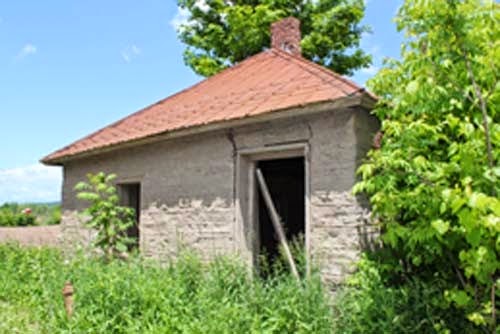
So when traveling on Route 46 from Oneida to Hamilton you might pass a beautiful, now deserted stone building on the side of the road. Missing windows and doors… it sits as reminder of Eaton & Munnsville’s past, a past that included many famous people and famous products. One such man was born in the building and passed his childhood there observing the area and interested in its development, his name was William Dempster Hoard.
Hoard spent many hours observing the growing of hops that was a mainstay crop during his formative years; a crop that depleted the already thin soil of this hilly Madison County, NY area. The farmers who lost their fortunes and farms to this fickle crop, wiped out by blight and the commodity market, changed to milk production and Holstein–Friesian cattle that were imported from Holland.

The cows were a needed agricultural addition that was - with its bi-product of manure - an enhancement of the soil and a new way of life for this Madison county, NY area. Hoard as a young man moved to Wisconsin in the westward exodus of the 1800’s and landed in an area that also had agricultural problems much like his former home. One day siting on a hillside noting the farmers going out of business or struggling, he came up with the idea of making the same change to cows, an idea that made Wisconsin the “Dairy State” for many years.

Hoard also started Hoard’s Dairyman’s Journal that gave information to farmers on dairy practices. He is considered the father of the refrigerated railcar that was needed to ship milk to markets at a great distance and today his drawings of the perfect barn have been copied by Cornell University. His motto was that happy cows produced more milk and that entering his dairy you were to treat his cows like “mothers” with kindness and respect.

In his lifetime he became the Governor of Wisconsin and helped bring abolition to the state, staunchly supporting legislation to accompany his beliefs.Today Madison County, NY is still an agricultural county and much of what was learned by our founding dairy farmer’s came out of Hoard’s Journal! 

I Have at the museum a wonderful letter he wrote about attending school at Pine Woods.  Charming remembrance of the one room school.


Sunday, August 19, 2018

Hops, Fall is coming, Eaton & hops history!

 As they say.. everything old is new again...and that goes for the history of an area and its products. As I was getting ready to pick my hops plants I decided to blog on Hops....so here it is!

“In 1808 James D. Coolidge planted the first hops field in Madison County. By 1859 NY supplied 87 percent of hops grown in the U.S.”  

That is an unbelievable statement but it is true. Madison County grew hops and the crop was a bumper crop that made many of the farmers in the area, but it also destroyed some.

The Hop commodities market was actually moved to Waterville where hops were bought and sold with the fluctuating hops market.  Many an Eaton Farm grew hops and held hops to get the best value at market. They also welcomed the pickers in season because in town the money flowed from outside to in.
Many a farm put families up during the “season” and stories of fun and friendships made abound… a more simple time.  My own mother recalled taking the canal to Madison County where her family would pick hops.  She as a small child remembered hiding under her mother’s skirt on the trip.

The hop fields of Samuel Coolidge ran between Madison and Eaton near the Summit level of the Chenango Canal.  The field crops were called by some locals, as filled with “the Devil’s weed”… because of Hops addition to beer to make it bitter or to add flavor and aroma.

Hops would later disappear from the hills of Eaton and Madison County because of blight and because of white or blue powdery mold.  Another problem “Temperance” played a large part.

Another facet of hop production were the numerous attempts to patent labor saving devices.  A few out of Eaton and the area are pictured in the back of the book.

One was a “HOP-PICKER’S BOX” designed by Frederick A Fargo of Pine Woods, New York it was Patent No. 949,915 dated November 22, 1881. (Fargo Corners in Eaton today).  He states that: “My invention consist of a hop-picker’s measure or box having such construction that it may be easily taken apart for stowing away in small spaces and for transportation, and easily set up for use.”

Another interesting invention out of Morrisville is a Vine Trellis.  The Trellis was submitted by Andrew S. Hart and is Patent number 495,673, dated April 18, 1893. Hart says: “The object of this invention is to provide a trellis for training chiefly hop-vines, and which shall be permanently erect on the ground to afford ready access to the uppermost parts of the vines.”

The time of hops passed and became a time of cows and corn that have in recent time given back land to the cultivation of Hops in Eaton and in Madison County.  It is interesting to note that at Fargo Corners today you can see a new “hop field” located on today's  Mosher Farm.


Wednesday, May 13, 2015

Hops, Beer, Patents and History on the march in Eaton!

The new history book that is coming out for Memorial Day Monday is filled with new tidbits on history and leads to another book that I am working on describing the Patents that came form the area.  As they say.. everything old is new again...and that goes for the history of an area and its products.

“In 1808 James D. Coolidge planted the first hops field in Madison County. By 1859 NY supplied 87 percent of hops grown in the U.S.”  

That is an unbelievable statement but it is true. Madison County grew hops and the crop was a bumper crop that made many of the farmers in the area, but it also destroyed some.

The Hop commodities market was actually moved to Waterville where hops were bought and sold with the fluctuating hops market.  Many an Eaton Farm grew hops and held hops to get the best value at market. They also welcomed the pickers in season because in town the money flowed from outside to in.
Many a farm put families up during the “season” and stories of fun and friendships made abound… a more simple time.  My own mother recalled taking the canal to Madison County where her family would pick hops.  She as a small child remembered hiding under her mother’s skirt on the trip.

The hop fields of Samuel Coolidge ran between Madison and Eaton near the Summit level of the Chenango Canal.  The field crops were called by some locals, as filled with “the Devil’s weed”… because of Hops addition to beer to make it bitter or to add flavor and aroma.

Hops would later disappear from the hills of Eaton and Madison County because of blight and because of white or blue powdery mold.  Another problem “Temperance” played a large part.

Another facet of hop production were the numerous attempts to patent labor saving devices.  A few out of Eaton and the area are pictured in the back of the book.

One was a “HOP-PICKER’S BOX” designed by Frederick A Fargo of Pine Woods, New York it was Patent No. 949,915 dated November 22, 1881. (Fargo Corners in Eaton today).  He states that: “My invention consist of a hop-picker’s measure or box having such construction that it may be easily taken apart for stowing away in small spaces and for transportation, and easily set up for use.”

Another interesting invention out of Morrisville is a Vine Trellis.  The Trellis was submitted by Andrew S. Hart and is Patent number 495,673, dated April 18, 1893. Hart says: “The object of this invention is to provide a trellis for training chiefly hop-vines, and which shall be permanently erect on the ground to afford ready access to the uppermost parts of the vines.”

The time of hops passed and became a time of cows and corn that have in recent time given back land to the cultivation of Hops in Eaton and in Madison County.  It is interesting to note that at Fargo Corners today you can see a new “hop field” located on today's  Mosher Farm.


Sunday, April 28, 2013

A time of American innocence, fun, music...is gone forever!

The past few weeks have certainly been an interesting if not sad time for America.  It started with the death of Annette Funicello who was a true piece of the culture and time that I grew up in.

It was an innocent time of growing up in an America reflected in TV by shows like Mickey Mouse Club, Lawrence Welk, Perry Como and all those family sit-coms like Leave it to Beaver, Dobie Gillis and so many more.  Fun was going to a school hop or a party at the beach in the summer.  Movies were simple stories for teens - love and loss, love found…and all time… music you could dance to.

Annette’s death did seem to haunt us as we sung Beach Boy songs and remembered Frankie Avalon, Fabian and the rest of American Bandstand’s crew.  I can still remember that my brother and friends started, with my dad’s help, a carrier current radio station.  We built it from scratch…I was the Sunday semi-classical hours host...they spun the rock and roll records and went to the hop Saturday nights playing records as what we would call disc jockeys today.

I think quite frankly it was a much more honorable and simple time when music was changing and “Rock and Roll” was at a peak.  Young hopefuls could get their music played on local stations and radio stations could enjoy finding new stars. 

In Syracuse for concerts we went to the old Three Rivers Inn for an inexpensive Saturday show to see some well-known young singer or group in person… hitching a ride with someone’s dad or mom.  Yes we didn’t have our own car!  Some of my best moments were walking home from school talking with friends along the way.  Yes we talked about our day in person - not on the cell phone or via the Internet.

I think many people my age were stunned and felt that that time in America had come to an unfortunate and very sad end.  Annette was dead...and worse yet… of a coma from Multiple Scleroses...a coma she had been in for years.

Obituaries popped up everywhere from the Beach Boys Website, Disney sites, News Sites, Radio, TV everything…why….I think because we wanted secretly to get that part of America and our much simpler and innocent life back!

These savored and simple remembrances came to a screeching halt when two young men bombed the Boston Marathon…

Enjoy this clip of American Bandstand!